
Reviewing what’s on a background check helps you audit critical data points before making an investment, finalizing a partnership, or vetting external contractors. Knowing what a report displays allows you to verify identity metrics and public records proactively before executing high-stakes decisions.
A background check may include identity details, address history, possible aliases, public records, criminal record data, watchlist results, and other information depending on the report type. Not every report includes the same sections, so it is important to understand what is being searched before you rely on the results.
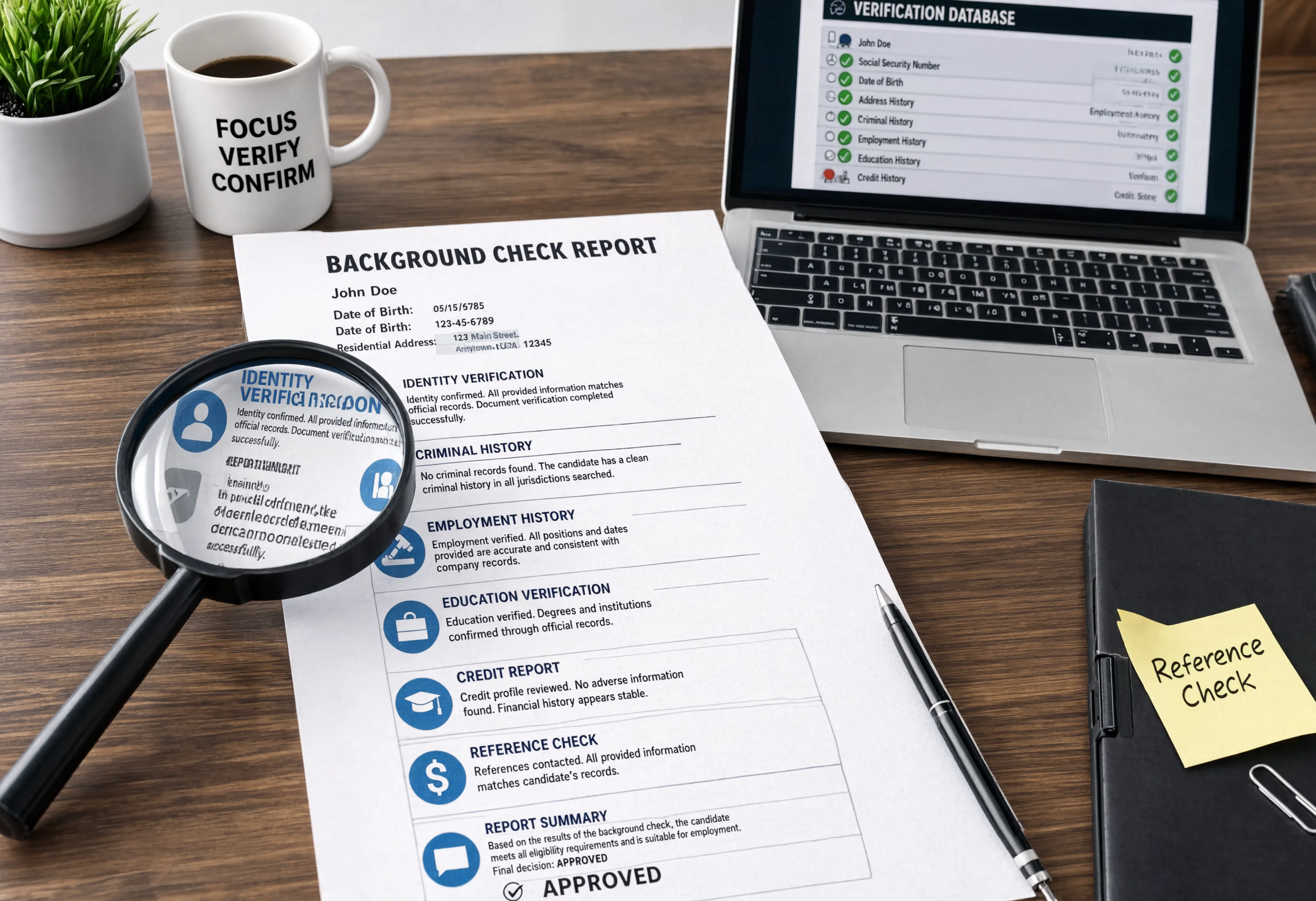
What’s on a Background Check and Why Its Details Can Vary
When people ask what’s on a background check, they often expect one standard list. In reality, report contents can vary.
A basic report may focus on identity data, possible addresses, and contact information. A broader report may include criminal search coverage, watchlist screening, public record data, and other connected details.
The scope matters. A report used for general information is different from a formal employment, tenant, credit, licensing, or insurance screening report. Those regulated uses may require a specific process and a compliant screening provider.
Identity Details
Most background checks begin with identity details. This section may include a full name, possible name variations, age range, known locations, phone numbers, and other data points connected to the person.
Identity details help confirm whether the report points to the right person. Many people share the same first and last name, so several identity points should be reviewed together before trusting the result.
Address History
Address history may show current and previous locations linked to a person’s record. This can help show whether the person’s information is consistent over time.
It can also help separate two people with similar names. If a report shows locations that do not match what you know, that may need closer review before you treat the result as accurate.
Aliases and Name Variations
Aliases do not always mean something suspicious. A report may show a maiden name, married name, shortened name, middle name variation, spelling variation, or previous legal name.
This section matters because records are frequently filed under various legal name iterations. When evaluating what’s on a background check for data validation, you should cross-reference aliases with address history and age ranges to eliminate false positives.
Criminal Record Data
Some background checks may include criminal record information. This may depend on the report provider, jurisdiction coverage, available records, and the type of search used.
Criminal record sections should be reviewed with context. Look at the name match, date, location, case type, and source details when available. A record with a similar name should not be treated as confirmed without checking other identity details.
For regulated decisions, such as employment or housing, follow the proper legal process and use a screening report designed for that purpose.
Watchlist Screening
Some reports may include watchlist screening. This can involve checking available lists that flag certain public safety, sanctions, or restricted-party information.
Watchlist results should be reviewed carefully because name matches may not always mean the record belongs to the same person. Dates, locations, identifiers, and source details matter when available.
Common Report Sections
Here is a simple overview of what may appear in a background check report:
| Report Section | What It May Show | Why It Matters |
|---|---|---|
| Identity details | Name, age range, phone numbers, and linked locations | Helps confirm the report is tied to the right person |
| Address history | Current and past addresses | Helps review location consistency over time |
| Aliases | Maiden names, nicknames, or name variations | Helps connect records filed under different names |
| Criminal records | Case information, dates, locations, or record details when available | Helps identify records that may need closer review |
| Watchlist results | Public safety, sanctions, or restricted-party matches when included | Helps flag records that require careful identity review |
| Public records | Available record data from public sources | Helps give a broader view of connected information |
What May Not Be Included
A background check does not always include every possible record. Some information may be missing because it is unavailable, outdated, restricted, or not part of that report type.
A general information report may not include official employment verification, education verification, credit history, driving records, drug testing, professional license checks, or fingerprint-based records unless the provider specifically offers those services.
That is why it is important to check the report description before ordering. You should know what is included, what is excluded, and whether the report matches your purpose.
How to Review a Background Check
Start with the identity section first. Confirm the name, age range, address history, phone numbers, and possible aliases. Then review deeper record sections, such as criminal records or watchlist results.
If something does not match, do not assume the report is wrong or right immediately. It may be an old record, a name variation, or a possible false match.
A careful review looks at several details together. Names, dates, locations, aliases, and source details should support each other before you trust the result.
Use the Report Carefully
Knowing what’s on a background check is helpful, but you also need to know how the report should be used. Some reports are made for general information only. They may help you review identity and public record details, but they may not be suitable for employment, tenant, credit, insurance, or other regulated decisions.
For formal decisions, use the correct screening process and follow applicable legal requirements. A general report can be useful for review, but it should not be treated as the final answer for every situation.
Conclusion: Analyzing Your Report Metrics
Understanding what’s on a background check relies on reading the documentation in its proper context: linking core identity markers, historical locations, and public data registries together.
The most important step is reviewing the information in context. A report is more useful when identity details, locations, dates, and record sources are checked together.
If you want to see how identity details, address history, aliases, and public record information can appear in one report, visit ClearCheck and choose the option that fits your review purpose.